

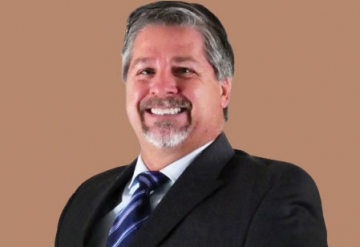

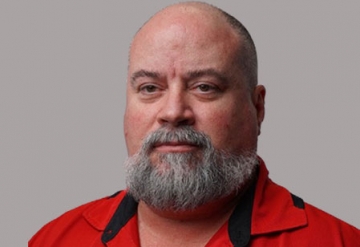

 Ben McCafferty, Project Manager, Shook Construction
What motivated you to build a career in construction project management?
My family has a long history of being in the construction industry. My great-great-grandfather had a hand in designing and constructing the Soldiers and Sailors Monument here in Indianapolis at the Circle. I grew up looking at construction drawings when my dad would have them sprawled out on the dining room table nearly every night. It fascinated me from an early age. Hearing the conversations back then when everyone used the Nokia walkie-talkies because they were free and could never understand what anyone was saying, but desperately wanted to know! I always knew that somehow and someway it was in my bones and would be my passion for the rest of my life.
How do you keep large projects on schedule amid field challenges and changing conditions?
I try not to put anyone on the defensive. It seems most effective when all parties are in the same room, face-to-face, and you create a collaborative atmosphere that lets everyone think clearly and effectively. We have had a great deal of success with the pull planning approach, where each trade is assigned a different color post-its and we, as a group, map out the schedule physically on sheets hung up on the trailer walls. This creates the baseline, and then you hold your team accountable since they have had a heavy role in determining our destiny.
On larger projects such as IU Health, we utilized Hoylu, which was a great move that allowed subcontractors to log in weekly and input their own activities and durations. We wrote this in each trade package’s scope of work so that everyone would participate. If you develop the relationship properly, enforcing it never seems to be a problem. The quicker you got your activities input for the week, the more favorable your position would tend to be and this caught on. This was on a roughly 8-week look-ahead basis.
Which trends are influencing project planning and execution in construction today?
Most people would say some BS AI software, but in reality, we haven’t seen as much AI integration as outsiders might think. Relationships are still very much a main driver. Heavy involvement of the GC/CMs during the design phase, such as design-build, design-assist type seems to be gaining traction. Architects and engineers are becoming increasingly collaborative in the design/planning stages of projects. I believe owners and clients get the best product with these types of approaches. They are much more vetted and streamlined once construction starts. Sometimes this method is scary for the owners because they might worry that they are getting “hosed” on the precon fees or being slighted in some way but in reality, they are saving a great deal by catching 90% of forthcoming issues well ahead of them presenting themselves.
"Make pre- construction kick-off meetings for every trade a non- negotiable."
The shortage of craft workers and the rise of AI programs from pilots to practical workflows are a major concern. How do you convince the next generation to go into the trades when they are being told daily that robots will eventually take their jobs? Who is going to continue building our infrastructure before robots are economically viable? This will also be felt in project schedules, in my opinion. Schedules are going to get lengthier due to the shortage of manpower, while the owner’s expectations are becoming increasingly faster because of technological advancements and the notion that it is “easier”. A modular building most likely will be a heavier topic of conversation as well.
How do you keep teams aligned on complex projects?
One must find the right recipe of mixing processes and procedures, technology and culture. If a company does not make culture a top priority, I doubt it will be very successful in the coming years. Culture is becoming an important aspect valued by individuals. We used a motto on IU Health that essentially was “3 out of 10 great ideas, and you’re in the Hall of Fame.” Anyone is capable of excellent ideas and the other seven are bound to spark creation for the group as a whole. It also gave people a voice, giving them the confidence to let their authentic selves shine. Also, encourage open-book transparency. When PMs collaborate instead of withholding knowledge thinking it will inhibit career growth, innovation thrives. Our Dayton office recently switched to a “Hotel” style office arrangement, where most of the staff does not have an assigned office, workstation, etc. This creates a melting pot of your whole company’s culture, encourages interaction and bonding and limits isolation.
Technology has helped greatly in this way. Organizing the fast-paced changes and operating on fast-tracked foundations delivery requires everyone to be aligned within half an hour of a change on a large jobsite. The programs we have today allow us to expedite in ways that were not previously possible, while keeping the entire project team abreast. BIM is a major component here as well. Coordinating on a model that is essentially the virtual building has become the norm.
How do you maintain safety, quality, and efficiency across project phases?
Maintaining safety, quality and efficiency across all project phases – design, preconstruction, execution and closeout – requires a structured approach. Build safety into every aspect as a common-sense, culture and discuss first in meetings. Make pre-construction kick-off meetings for every trade a non-negotiable. Use a single construction software that keeps document control, communication and Project Engineering tools all housed under one roof. I know most of the larger contractors all use either Procore or Autodesk Build, which has become a non-negotiable on $5M+ sized projects. Hire a dedicated individual to manage employees’ continuous development.
What advice would you give to professionals entering construction project management?
I would recommend a Co-Op experience at Shook Construction! Also, think about what you want to build and then pursue companies that align with your hobbies, interests and goals. Most importantly, I would position myself to get on-site experience as much as possible when entering the construction space. You hear things, see things and feel lots of different emotions that you will draw on for the rest of your career. Nearly everything I encounter on a pursuit project, I’ve done or seen it actually constructed with my own eyes; this is key. Also, take a few psychology and sociology courses in college. A jobsite is as primal an environment in the real world as you will get and knowing how people tick will aid in getting people’s buy-in on your ideas and arguments greatly.