THANK YOU FOR SUBSCRIBING


× 
Construction Tech Review Weekly Brief
Be first to read the latest tech news, Industry Leader's Insights, and CIO interviews of medium and large enterprises exclusively from Construction Tech Review





Transformation in the Construction Industry
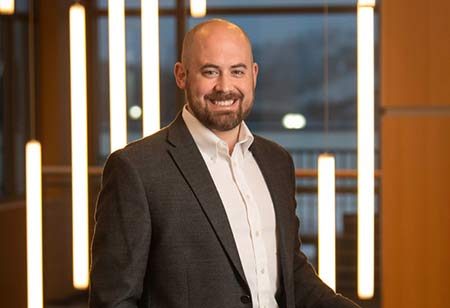
Daniel Stone, Director of Business Transformation, Barton Malow Company
 Daniel Stone, Director of Business Transformation, Barton Malow Company
Throughout its history, the construction process has been hampered by a lack of innovation and an inability to be agile. Many of the building tactics our industry uses today are similar to the ones used over a century ago. But that’s changing — and rapidly. With the introduction of new technologies and processes, the construction industry is finally on the cusp of achieving what our peers in manufacturing have already done.
Convergence
Years ago, we thought BIM was going to change everything, but as builders, we shouldn’t rely on construction being transformed by a single innovation. Instead, it’s about finding the right recipe of emerging tech and business models that allows a leap forward. It is going to be the power of merging distinct technologies into a unified whole. We believe in the power of convergence.
When seemingly different techniques are connected, you bring about the potential for exponential change in the industry.
Contestants are challenged with solving a problem within the construction industry, validating their solution through market research, and forming that into a practical and tangible idea.
Practices and innovations like standardizing fabrication elements, building an incentive-based business structure, creating a technology-enabled workforce, and harnessing the power of big data work hand-in-hand.
From the drawing board to the field
At Barton Malow, we believe in the power of firsthand experiences. New technologies are often piloted on the ground like our investment in Construction Robotics, a New York-based robotics company. Our job sites have seen the presence of their semi-autonomous brick-laying machines (SAM100), lift-assist devices (MULE), and more. Our partnerships also extend into wearable technology like Guardhat and SuitX. The latter develop exoskeletons that help take the pressure off our team members’ bodies as they work, while Guardhat creates smart hardhats that feature fall detection and remote guidance. And while these technologies can make an immediate mark at the job site by increasing safety and efficiency, our goal is to continue to put our resources into innovations like these that will continue to make an impact on our industry.
Innovation from within
As we look inward, Barton Malow’s talented workforce has produced an incredible number of processes that can transform our industry. Flypaper Technologies, an internal start-up company, founded by our own Nick Fredricks, came from a straightforward idea: What if we could make job site coordination easier? Nick spearheaded programs like Sherlock, which makes life easier for project teams by giving them an interactive platform to highlight job site clashes, provide heatmaps, and more. As Flypaper Technologies continues to grow, it is developing new programs to disrupt the construction status quo through game-changing applications positively.
New ideas are also coming in the form of Barton Malow’s Shark Tank, modeled after the hit NBC television show. The internal competition provides innovators with the opportunity to develop and pitch a business idea to company leaders, and have a chance to become an entrepreneur. Contestants are challenged with solving a problem within the construction industry, validating their solution through market research, and forming that into a practical and tangible idea.
It’s essential to stay ahead of the curve. Many AEC firms are working to transform our industry. By partnering with other companies who are looking to make an impact and providing avenues of innovation within our own companies, we all need to do what we can to be trailblazers of convergence. Our industry is moving faster than it ever has, and it is no longer about just staying up-to-date with the latest innovations; it’s about predicting, developing, and implementing them ahead of time.

Read Also

Reframing Application Engineering for the Digital Age
Mark H. Wayne, PhD, PE, F. ASCE, Director of Application Technology & Engineering, Tensar, a division of CMC

The Human Side of Construction Safety Leadership
Brett Smith, Global Safety Director, Gardner Builders

Leading with Safety at Scale: A Practical Approach to Risk Management in Construction
Donovan Seeber, CHST, Corporate Safety Manager, Griffith Company

Engineering Roadway Design with Accountability and Vision
Maria Luchey, Project Manager, Roadway Design, Keck & Wood
How Early VDC Involvement Reduces Risk and Rework on Complex Projects
Nicholas DiRenzo, Virtual Design & Construction Director, Meyer Najem

Coaching, Not Blaming: Building a Stronger Construction Safety Culture
Jesse Garcia, Safety Manager, E-Z Bel Construction, LLC


 Copyright © 2026 All Rights Reserved | by:
 Construction Tech Review
| Subscribe | About us | Sitemap| Editorial Policy| Feedback PolicyTop
