THANK YOU FOR SUBSCRIBING


× 
Construction Tech Review Weekly Brief
Be first to read the latest tech news, Industry Leader's Insights, and CIO interviews of medium and large enterprises exclusively from Construction Tech Review
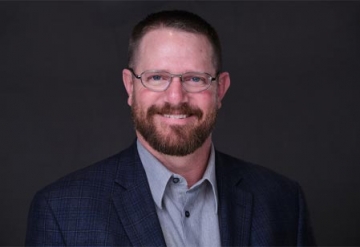




Coaching, Not Blaming: Building a Stronger Construction Safety Culture
Jesse Garcia, Safety Manager, E-Z Bel Construction, LLC
 Jesse Garcia, Safety Manager, E-Z Bel Construction, LLC
In my tenure as a safety professional, I have learned that the most effective approach to promoting safety culture is simple: listen, understand, and encourage.
Too often in our profession, safety efforts are driven by finger-pointing rather than fact-finding. I have witnessed—and at times been subject to—situations where the focus was on assigning blame to one individual instead of investigating root causes and reviewing systems. That approach rarely produces meaningful or lasting improvement.
A Coaching Approach to Safety
In my first role as a safety specialist, I trained warehouse order selectors on ergonomics and general warehouse safety. Training occurred fifty weeks out of the year, and class sizes grew significantly as operational demands increased. Every few weeks, someone would ask, “Jesse, were you ever a coach?” or “Did you coach at so-and-so school?”
The reason was simple: I approached safety like a coach.
I learned early on that if you confront a safety discrepancy by making someone feel uneducated or careless, you will not get far in improving behavior. But if you treat it as a coaching moment—an opportunity to teach, support, and reinforce expectations—people respond differently. They engage. They improve. They take ownership.
That lesson shaped my entire career.
Transitioning to Construction Safety
A few years later, I transitioned into construction safety—an entirely different environment from general industry. Construction sites are filled with individuals who have spent years outdoors swinging sledgehammers, finishing concrete, digging trenches, and working long hours in tough conditions.
When I began performing site visits and walkthroughs, I had to ask myself: How do you convince someone who has done a job a certain way for 20 years to change their method? How do you introduce additional PPE or new procedures to someone who has never been shown why they matter?
The answer was not enforcement alone. It was a connection.
Instead of focusing solely on compliance, I reminded frontline workers of something personal: the way they left home at dawn is the way they want to return at night. When safety is framed in terms of family, longevity, and pride in craftsmanship, it resonates far more than a regulatory citation ever could.
Relationships build influence. Influence drives safer behaviors.
The Three-Legged Stool: Safety, Quality, and Production
When discussing productivity and safety, I often refer to the “three-legged stool.” The three legs are:
• Safety
• Quality
• Production
If one leg is weakened or removed, the stool fails. An organization cannot sustain itself without all three functioning together.
Metrics such as EMR, TRIR, and DART further reinforce this reality. Safety performance is not separate from business success—it directly impacts it. That is why I emphasize “safety always,” not just “safety first.” Safety is not a slogan to prioritize temporarily; it is a constant standard integrated into every decision.
The Same Risks, Year After Year
One consistent observation throughout my time in construction is that the most common risks have not changed significantly. The data supporting this is seen in the annual Top Ten Violations list published by the Occupational Safety and Health Administration. Each year, we see many of the same hazards—fall protection, hazard communication, scaffolding, and more—shift slightly in ranking but remain persistent.
The opportunity to reduce these recurring risks rests with us. It requires continued leadership, engagement, and reinforcement of safe practices.
The Role of Technology in Safety
While many hazards remain consistent, technology has evolved dramatically. Advances in engineering controls have helped reduce worker exposure to dangerous conditions.
I recall observing a large excavator equipped with a specialized vacuum attachment used to lower utility lines into a deep trench and connect them to existing underground lines. This innovation reduced the need for workers to enter high-risk areas and minimized exposure to trench collapse or falling materials. Engineering solutions like these demonstrate how technology can significantly enhance safety outcomes.
Conclusion: Leadership and Trust Matter Most
Improving construction safety culture requires leadership commitment, consistent daily practices, and a no-blame reporting environment. It requires supervisors who coach instead of criticize and organizations that investigate systems rather than single out individuals.
Most importantly, it requires workers to believe that management genuinely prioritizes their well-being over schedule or cost.
When people feel heard, respected, and supported, safety stops being a requirement—and becomes a shared value.

Read Also
Reframing Application Engineering for the Digital Age
Mark H. Wayne, PhD, PE, F. ASCE, Director of Application Technology & Engineering, Tensar, a division of CMC

The Human Side of Construction Safety Leadership
Brett Smith, Global Safety Director, Gardner Builders
Leading with Safety at Scale: A Practical Approach to Risk Management in Construction
Donovan Seeber, CHST, Corporate Safety Manager, Griffith Company

Engineering Roadway Design with Accountability and Vision
Maria Luchey, Project Manager, Roadway Design, Keck & Wood
How Early VDC Involvement Reduces Risk and Rework on Complex Projects
Nicholas DiRenzo, Virtual Design & Construction Director, Meyer Najem

Building by the Model: Turning BIM into the Backbone of Field Execution
Adam Abernathy, BIM/VDC Manager, Jesse Stutts Inc


 Copyright © 2026 All Rights Reserved | by:
 Construction Tech Review
| Subscribe | About us | Sitemap| Editorial Policy| Feedback PolicyTop
