THANK YOU FOR SUBSCRIBING

× 
Construction Tech Review Weekly Brief
Be first to read the latest tech news, Industry Leader's Insights, and CIO interviews of medium and large enterprises exclusively from Construction Tech Review


The Changing World of Project Management
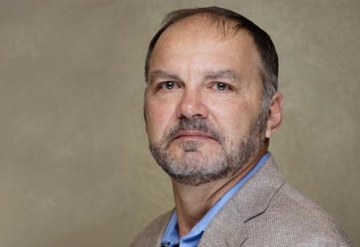
Steve Mauk, IT Manager, Infrastructure Project Management, Mr. Cooper [NASDAQ: COOP]
 Steve Mauk, IT Manager, Infrastructure Project Management, Mr. Cooper [NASDAQ: COOP]
For many years, we have worked with very formalized processes in project management. Those processes provided a framework for project managers and teams to deliver projects over time in a predictable manner. This methodology was tried and true; everyone understood the relationships of the golden triangle between quality, budget, and resources. Being predictable and repeatable provided a lot of stability to the project world but along with that predictability came a lot of waste. Projects would run for months and years before the plug would be pulled and the project cancelled; unfortunately, more often the project would eventually grind to an end and be called a success. People began to explore new ways to deliver projects and in 2001 the Agile Manifesto was written. This manifesto outlined a new way of doing things, placing relationships and outcomes over process and documentation. Radical stuff! Since then companies have been adopting Agile practices in one form or another ever sense.
Business seeks value and the beauty of the Agile Manifesto is that when utilized appropriately value is realized earlier in the project than in the Waterfall world. With a Waterfall project, the project team works to define the requirements, design the solution, produce the product, test and finally deliver the finished product. Value is not realized until the product is delivered; if the requirements aren’t correct then the product is not aligned with what was requested resulting in a tremendous amount of waste. Agile throws all that out the window by aligning the customer with the project team through constant communication. This allows the team to make course corrections as needed; this allows the team to move value up the timeline and realize benefits sooner than later. Using the 80.20 rule you may be able to end the project early if the last 20 percent of work does not provide enough value to warrant completing the project. Please bear in mind that this is a highly-simplified assessment of what is happening but it does capture the essentials.
In the traditional Waterfall project methodology, the Project Manager serves as the center point of the project; expertise is said to be an inch deep and a mile wide, project managers must know a little about of lot of things to ensure smooth project execution. Some of the many skills a PM uses include motivational speaker, master scheduler, meeting facilitator, presenter, financial wizard, engineer, and architect. Along with all those items a good PM knows what he doesn’t know and when to seek expert advice.
While some of these things are technical in nature most center around communications and the strongest project managers are great communicators. Scrum is the most commonly used framework in Agile and there is not a role equivalent to the project manager. There are two roles that people commonly assume are the equal of a PM, product owner or scrum master. In reality a PM must adapt to fill one of these roles; it would be dangerous to the project to try and fill both of these roles with one person. The product owner has to fully understand the goals and objects of what the project seeks to deliver so that they may advocate for what delivers the most value as early in the project as possible. The product owner will be deeply involved with the project team to refine the deliverable list throughout the life of the project. Conversely the scrum master works closely with the project team to make sure they can maximize their delivery; the scrum master facilitates the team scrum meetings and helps to remove anything that impedes the project schedule or velocity.
Today’s project manager must evolve as his organization evolves towards an agile delivery framework touse their complete skillset; PM’s continue to provide the extra value to drive organization change beyond that of a product owner or scrum master. There is no role more suited or prepared to drive change than that of a project manager and today’s pm’s have the broad range of skills necessary to evolve into that driver of change to speed organizations down the path to adopting an agile framework over the old waterfall methods.

Read Also
Reframing Application Engineering for the Digital Age
Mark H. Wayne, PhD, PE, F. ASCE, Director of Application Technology & Engineering, Tensar, a division of CMC

The Human Side of Construction Safety Leadership
Brett Smith, Global Safety Director, Gardner Builders

Leading with Safety at Scale: A Practical Approach to Risk Management in Construction
Donovan Seeber, CHST, Corporate Safety Manager, Griffith Company

Engineering Roadway Design with Accountability and Vision
Maria Luchey, Project Manager, Roadway Design, Keck & Wood
How Early VDC Involvement Reduces Risk and Rework on Complex Projects
Nicholas DiRenzo, Virtual Design & Construction Director, Meyer Najem
Coaching, Not Blaming: Building a Stronger Construction Safety Culture
Jesse Garcia, Safety Manager, E-Z Bel Construction, LLC


 Copyright © 2026 All Rights Reserved | by:
 Construction Tech Review
| Subscribe | About us | Sitemap| Editorial Policy| Feedback PolicyTop
