THANK YOU FOR SUBSCRIBING


× 
Construction Tech Review Weekly Brief
Be first to read the latest tech news, Industry Leader's Insights, and CIO interviews of medium and large enterprises exclusively from Construction Tech Review

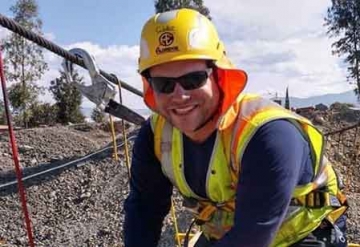



A Construction Space Oddity, Time to Leave the Capsule
Blaine Crawford, Director of Information Technology, C.W. Driver, LLC
 Blaine Crawford, Director of Information Technology, C.W. Driver, LLC
A common perception of the construction industry is that of it being relatively slow with technology adaption. After all, construction methods seemed to have not changed much since the completion of the Roman aqueducts some might think. But things are quietly but rapidly changing and it is time to dispel this misperception, or maybe more accurately it is time to reveal the next paradigm shift in the industry, especially if you are the technology leader of your organization. There is no doubt that the construction industry may have been slow to adapt to new technologies with little negative consequence but that too is a fading reality and constructors will soon realize the need for advanced technologies to win new contracts in a fiercely competitive market. Enter center stage, process automation and artificial intelligence (AI).
A similar paradigm shift took place with the genesis of “cloud computing” with its abundant offering of managed services ripe with opportunity to improve a technology infrastructure rapidly and cost efficiently. Now a more construction focused shift is taking place with the emerging technologies of automation and AI which presents new opportunities for process improvements and operating efficiencies. Things we watched years ago in futuristic cartoons such as the Jetsons are no longer far fetched from our immediate future. We have already witnessed crude implementations of automations and AI in other progressive industries decades ago, with the Automatic Teller Machine (ATM) and then at your favorite grocer with self-service checkouts and then came along voice activated smart device assistants and now we are seeing an “Internet of Things” (IoT) environment being created in an almost adhoc nature. This IoT is a kind of primitive framework for the next phase of automations and AI evolution and it will soon be on your construction sites in some format or another.
It is time to suit up and open the capsule door to a brave new world of construction methodology
What is now a human capital intensive process for all types of construction, could be condensed down into an assembly line like process not very different from what the automotive industry has been doing successfully for decades. Just imagine printing out structures on demand and on site without the need for the delivery of oversized truckloads. While the common perception of robotics is based around precision assembly processes such as tight tolerance manufacturing or printed circuit boards used in electronics, construction robotics will become common place for the more rudimentary tasks at first but progressing to increasingly complex ones as the technology matures.
The advent of the cloud age challenged the foundation of the corporate network infrastructure. There was immediate human collateral damage with the elimination of the need for certain “on premise” positions such as the corporate email server administrator. But while some career paths went the way of the dinosaurs, others were created with new titles like “Cloud Infrastructure Engineer” and those that embraced this shift and adapted did well. Automation and AI will have a similar effect for both professional and skilled labor types of construction positions. Imagine drones that could supply the construction sites with materials and while robotics take care of the installation faster and more consistently than the human counterparts. Both methods already exist so it is inevitable for their application to the construction industry. Just think of all the OSHA requirements that no longer apply with crane operations or structural steel erection for example. Another example is the robotic layout of building interiors, which has evolved from the developments of building information modeling (BIM). These layout robots can work in the wee hours of morning unhindered by other personnel and without the additional costs of overtime pay or the need to take frequent breaks or be under the governance of organized labor.
Other considerations that encourage this migration to a silicon based labor force are the overhead costs associated with benefits such as healthcare, time off, or insurances effected by safety factors such as workers compensation etc.
Not to be cavalier about this AI workforce concept and all the ensuing social economic impacts it will certainly cause, but there are real and compelling business reasons that will almost force this change within the construction industry. Of course, there are many other opposing considerations that might offset some of the gains herein mentioned but they will not be enough to stop the momentum to a technology induced transformation of construction processes. Traditional orange safety vests and hardhats could be a rarity on future project sites, replaced with wearable technology that enhances safety and productivity. 
Identified Technologies: Know When Others Guess
Dick Zhang, CEO 
INSITE IT: Digital Construction Technology Providers
Thomas Roithmeier, Co-Founder & CEO, Andreas Simader, CTO & Co-Founder, Florian Altmann, Co-Founder
Those employed in the construction industry need to pay close attention to the application of emerging technologies to the construction business model. It can be all too easy for a company to fall into a culture of complacency or to become consumed with the daily challenges of running a profitable business. This is when the technology leader needs to design an appropriate strategy to ensure the readiness of the company’s technology infrastructure and to keep the executive team well informed of these looming changes as they relate to the core business. The success of any subsequent technology implementations will be the responsibility of the technology leader so gaining executive support for these technology initiatives is very important. The construction industry is cyclical in nature and very sensitive to prevailing economic conditions. The last couple of decades has seen quite a bit of consolidation among players both big and small. Cloud computing was a novel and disruptive force in the entire business world: a real-world case study for the theory of the survival of the fittest. The permeation of automation and AI in construction will also be another one of these disruptive evolutionary forces. It is time to suit up and open the capsule door to a brave new world of construction methodology.
Check This Out: Top Compliance and Safety Companies

Read Also

Reframing Application Engineering for the Digital Age
Mark H. Wayne, PhD, PE, F. ASCE, Director of Application Technology & Engineering, Tensar, a division of CMC

The Human Side of Construction Safety Leadership
Brett Smith, Global Safety Director, Gardner Builders
Leading with Safety at Scale: A Practical Approach to Risk Management in Construction
Donovan Seeber, CHST, Corporate Safety Manager, Griffith Company

Engineering Roadway Design with Accountability and Vision
Maria Luchey, Project Manager, Roadway Design, Keck & Wood

How Early VDC Involvement Reduces Risk and Rework on Complex Projects
Nicholas DiRenzo, Virtual Design & Construction Director, Meyer Najem

Coaching, Not Blaming: Building a Stronger Construction Safety Culture
Jesse Garcia, Safety Manager, E-Z Bel Construction, LLC


 Copyright © 2026 All Rights Reserved | by:
 Construction Tech Review
| Subscribe | About us | Sitemap| Editorial Policy| Feedback PolicyTop
