THANK YOU FOR SUBSCRIBING


× 
Construction Tech Review Weekly Brief
Be first to read the latest tech news, Industry Leader's Insights, and CIO interviews of medium and large enterprises exclusively from Construction Tech Review

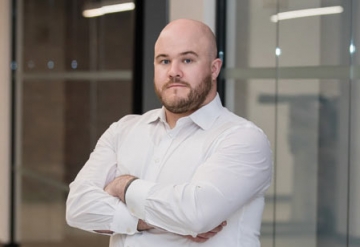



Emerging Technological Trends in the Construction Industry
Bob Smith, Manager, Construction Management Department, Ulteig
 Bob Smith, Manager, Construction Management Department, Ulteig
Bob Smith is a manager in the Construction Management Department at Ulteig, a consulting engineering leader in the Lifeline Sectors of power, renewables, transportation, and water. He is an experienced Construction Engineer with a history of managing large, complex highway, bridge, and tunnel construction projects using both traditional Design Bid Build and CMGC processes. Prior to joining Ulteig, Bob spent 14 years with the Illinois Department of Transportation before working with the Colorado Department of Transportation (CDOT) for nearly 18 years.
“Technology advancements have made it possible for construction companies to communicate with one another quite effectively”
As a CDOT project engineer, Bob managed several high-profile projects, including the Veterans Memorial Tunnels in Idaho Springs and major upgrades to the Eisenhower Johnson Memorial tunnels that pass under the Continental Divide. One of Bob’s largest projects at CDOT was the construction of the I-70 EB Peak Period Shoulder Lane, a $75 million-dollar, award-winning, first-of-its-kind widening and tolling project.
What are some of the challenges and trends impacting the construction industry?
One of the trends we have observed over the last eight to ten years is the use of alternative delivery—especially in the public sector. We’ve had a lot of success using alternative delivery methods in construction, partially because it addresses several of the challenges we consistently face. These include “old” problems like finding ways to save the client money while still delivering a successful, on-time project or materials with fluctuating costs that can be difficult to find and obtain. It can also be a struggle to find designers, contractors, and engineers who can anticipate each other’s needs—and that’s really important to our clients. Alternative delivery lets us take a proactive approach to these issues by streamlining the project team and process and building a schedule that’s flexible enough to mitigate any unforeseen negative impacts.
What are some of the projects that you’ve been part of recently?
Several of my recent projects presented unique challenges. While constructing an underpass beneath a railroad, we faced numerous supply chain and structural steel difficulties in addition to the standard issues that seem to be unique to railroads. To address these, we had our contractor review every major iteration of the design, checked with vendors repeatedly to ensure required materials were in stock, and prioritized stakeholder engagement early and often with BNSF, the railroad.
How do you envision the future of the construction industry?
As the use of drones and robotics in the construction space increases, we see opportunities like surveys that are safer, faster, and have the capability to provide real-time updates. During a project where we acted as the owner’s representative for the City of Arvada, Colorado, we used drones to map the area, allowing us to bypass weather impacts and record as-built conditions as the project progresses. We also built an incredibly effective GIS tool for the project—that we still use today—that allows clients and stakeholders to give regular feedback pinpointed to a specific location.
What would be your piece of advice for budding professionals in this field?
No matter the project, collaboration is usually the key to success. It’s crucial for us to establish relationships with co-workers, vendors, consultants, and design teams in order to work efficiently. Also, stay updated! It’s important to look for opportunities to actively learn about some of the cutting-edge technology being introduced.

Read Also

Reframing Application Engineering for the Digital Age
Mark H. Wayne, PhD, PE, F. ASCE, Director of Application Technology & Engineering, Tensar, a division of CMC

The Human Side of Construction Safety Leadership
Brett Smith, Global Safety Director, Gardner Builders
Leading with Safety at Scale: A Practical Approach to Risk Management in Construction
Donovan Seeber, CHST, Corporate Safety Manager, Griffith Company

Engineering Roadway Design with Accountability and Vision
Maria Luchey, Project Manager, Roadway Design, Keck & Wood
How Early VDC Involvement Reduces Risk and Rework on Complex Projects
Nicholas DiRenzo, Virtual Design & Construction Director, Meyer Najem

Coaching, Not Blaming: Building a Stronger Construction Safety Culture
Jesse Garcia, Safety Manager, E-Z Bel Construction, LLC


 Copyright © 2026 All Rights Reserved | by:
 Construction Tech Review
| Subscribe | About us | Sitemap| Editorial Policy| Feedback PolicyTop
