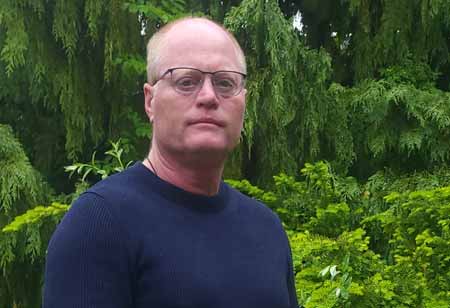







 Nicholas DiRenzo, Virtual Design & Construction Director, Meyer Najem
Complex construction projects today are defined by tight schedules, evolving regulations, constrained sites and unpredictable existing conditions. These factors create on-site surprises, miscommunications, change orders and substantial rework that inflate costs and undermine project certainty.
Virtual Design and Construction (VDC) addresses these challenges by introducing digital precision and proactive planning from the earliest stages. When involved early during conceptual and design phases, VDC transforms reactive firefighting into preventive strategy, delivering fewer field disruptions, better stakeholder alignment, dramatically reduced rework, safer execution, a higher level of quality and stronger cost control.
The Renovation vs. New Construction Decision
Owners frequently face a difficult choice, renovate an existing facility or build new? New construction offers predictability with known conditions but comes with higher upfront costs. Renovation projects are more sustainable, promise cost savings and preserve the existing infrastructure, but carry the risk of discovering unforeseen conditions that can derail budgets and schedules.
“Early VDC involvement represents a fundamental shift toward proactive excellence, slashing risks and rework while unlocking efficiency, safety, quality and innovation.”
On renovation projects, early VDC involvement fundamentally changes this formula. By deploying laser scanning during feasibility studies, owners gain precise knowledge of existing conditions before committing to a renovation. This removes the guesswork that has traditionally made renovation riskier than new construction. Teams identify structural limitations, existing system capacities and spatial constraints early, enabling accurate cost estimates and realistic schedules. What was once an uncertain gamble becomes an informed decision backed by hard data, unlocking substantial savings while minimizing traditional risks. The ultra-precise measurements the laser scan yields also become a priceless tool for the design team to detailed document development.
Detecting and Eliminating Issues Before They Reach the Field
VDC allows teams to detect conflicts such as MEP systems clashing with structural elements within a digital environment. In projects involving existing structures, laser scanning captures accurate as-built conditions early, grounding clash detection in reality rather than outdated drawings. Teams resolve interferences digitally, avoiding field disruptions to students, patients or occupants and preventing change orders and schedule slips.
Real-World Impact: Danville Community High School
The 140,000-square-foot addition and 186,000-square-foot renovation at Danville Community High School demonstrates this approach in action. The project team laser scanned above-ceiling areas during preconstruction to document existing conditions, then coordinated all new MEP systems in 3D before construction started. As demolition occurred, teams scanned again to confirm assumptions and make real-time adjustments. Over 2,400 constructability items were resolved during coordination and 43 RFIs were submitted to the design team before construction began, preventing costly field changes and keeping the project on schedule.
Fostering Superior Collaboration
Early VDC fosters superior collaboration in multi-stakeholder environments. Traditional approaches create information silos where assumptions accumulate and surface as disputes later. VDC provides a shared digital platform where architects, engineers, contractors, owners and facility managers work from a single, accurate view. Laser scanning supplies precise existing-condition data from the outset, empowering all parties to contribute meaningfully. This transparency leads to fewer miscommunications, reduced RFIs, better constructability assessments and smoother execution with minimal operational interruptions.
Minimizing Rework Through Precision
Rework remains one of construction's most persistent drains. Late discoveries from inaccurate existing conditions can inflate costs by 5 to 15 percent through field adjustments, material waste and delays. Early VDC counters this by capturing as-built realities precisely, eliminating guesswork and enabling designs and prefabrication that integrate seamlessly. For complex renovations, this minimizes on-site cuts and prefabrication errors while supporting low-disruption upgrades. The impact is clear, fewer RFIs, lower accident risks, reduced waste and accelerated completions.
The Strategic Advantage
Projects finish faster with tighter cost controls, elevated safety records and better alignment with sustainability goals. Amid ongoing labor shortages, supply chain volatility and rising complexity, these gains provide real resilience. Early VDC involvement represents a fundamental shift toward proactive excellence, slashing risks and rework while unlocking efficiency, safety, quality and innovation. As projects continue to grow in scope and challenge, embracing early VDC positions teams to deliver reliable, high-performing results that exceed expectations.