THANK YOU FOR SUBSCRIBING


× 
Construction Tech Review Weekly Brief
Be first to read the latest tech news, Industry Leader's Insights, and CIO interviews of medium and large enterprises exclusively from Construction Tech Review



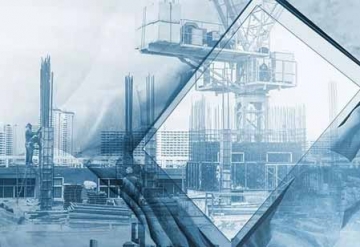

Construction Industry And The New World
Thomas graminger, Business Models & Licensing and 3D Mapping Services, STRABAG AG
 Thomas graminger, Business Models & Licensing and 3D Mapping Services, STRABAG AG
Old-given structures, many employees, local production, high fixed costs, and large investment capital are mostly part of old economy business models. Industries have to rethink now.
The challenge of the construction industry lies in the business models of the future. Soon, it will surely be over with the solid and conventional model. The construction industry has been trying for years to catch up with the level of digitalisation of other industries, e.g., the automotive industry. In the meantime, the requirements from other sides, such as public sector clients, have also been increasing.
Why does the Construction Industry Actually Need to be Digital and Innovative?
There are multiple reasons for this. On the one hand, we are gradually working on digital standards, such as BIM, for public tenders, and on the other hand, we want to make our processes more efficient to maintain our competitiveness on the market. Developing new, flexible, and scalable business models and optimising old business models with a future-oriented focus is the challenge.
Technology scouting, proof of concept, technology integration, etc., are bit by bit gaining importance in construction life. It is not just about finding new technologies, the added value behind the process must be focused on. Let’s take an example: Why does a construction company buy a machine control system and transfer gathered data to a cloud? Not because the process is digitised with it, or because it can produce cleaner edges with an excavator. The added value lies in being able to provide owed services to the client more quickly. In the end, time will be saved—and time is money. The question of “return on investment” stands behind every investment and always requires closer attention.
People and Technology
In 2015, STRABAG created a digital unit in the area of 3D mapping, which takes care of geodata acquisition, mass data evaluation, and data provision.
Diversification in different business areas creates a stable economic position and makes companies solid.
If we look at the topic of geospatial data, we also have to look at the construction process. Geodata is not only a constant companion in the lifecycle of a building, but is also an accompanying process in the construction phase, from calculation up to accounting. It is easy to see that there is a lot of potential for optimisation in this area. STRABAG 3D Mapping Services have made this their business and nowadays integrate new mapping technologies worldwide while being a service provider for data acquisition and data analysis for geodata on the internal and external market.
In addition to the need fordigitalisation and related activities such as change management, the topic of innovation, of course, plays a major role.
Because of modern technologies such as mobile mapping systems or UAVs, construction sites and the associated processes can not only be executed more quickly, but also in a more structured manner through clear databases. But as we all know, know; the core of success never lies in technologies alone. Every revolutionary technology is only as good as the people behind it. Years of experience with technologies and handling of mass data are the basis of success for any innovation division of a company.
The employees’ competencematters the most for the future of the construction industry. New qualification requirements, new functions, new workplaces are created.
The Bigger Picture
At the same time, we must look ahead and think about what the organisational structure of construction companies will look like in ten or twenty years. You don’t gather experience overnight. One of the biggest topics will be Artificial Intelligence (A.I.). Even if we start out yet, A.I. is developing rapidly and will strongly influence the entire industry as well as our private environment. Opportunities will arise, as will risks. In spite of it all, the one who is well placed is the one who keeps trying and who is able to see the bigger picture.

Read Also

Reframing Application Engineering for the Digital Age
Mark H. Wayne, PhD, PE, F. ASCE, Director of Application Technology & Engineering, Tensar, a division of CMC

The Human Side of Construction Safety Leadership
Brett Smith, Global Safety Director, Gardner Builders
Leading with Safety at Scale: A Practical Approach to Risk Management in Construction
Donovan Seeber, CHST, Corporate Safety Manager, Griffith Company

Engineering Roadway Design with Accountability and Vision
Maria Luchey, Project Manager, Roadway Design, Keck & Wood

How Early VDC Involvement Reduces Risk and Rework on Complex Projects
Nicholas DiRenzo, Virtual Design & Construction Director, Meyer Najem

Coaching, Not Blaming: Building a Stronger Construction Safety Culture
Jesse Garcia, Safety Manager, E-Z Bel Construction, LLC


 Copyright © 2026 All Rights Reserved | by:
 Construction Tech Review
| Subscribe | About us | Sitemap| Editorial Policy| Feedback PolicyTop
