Be first to read the latest tech news, Industry Leader's Insights, and CIO interviews of medium and large enterprises exclusively from Construction Tech Review
The Cutting Edge of Underground Construction: Innovations Explored
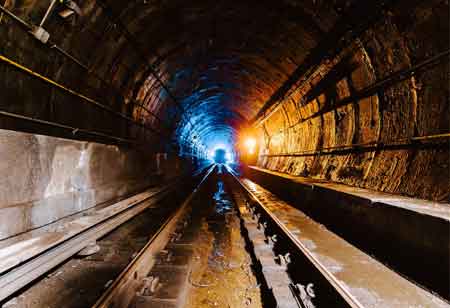
Advanced underground construction techniques, like tunnel boring machines and sustainable storage solutions, transform urban development, boosting efficiency, sustainability, and resilience.
By
Construction Tech Review | Wednesday, October 29, 2025
Stay ahead of the industry with exclusive feature stories on
the top companies, expert insights and the latest news delivered straight to your
inbox. Subscribe today.
FREMONT, CA: Due to the need for long-term infrastructure development, urban expansion, and space efficiency, underground building techniques have advanced significantly over time. These methods use a range of creative strategies to ensure environmental sustainability, cost-effectiveness, and safety in anything from subterranean utilities and storage facilities to tunnels and subway systems.
Tunnel Boring Machines (TBMs)
Tunnel Boring Machines have revolutionized underground construction by automating the excavation process. These massive machines can bore through various geological formations, from soft soil to hard rock, while simultaneously installing tunnel walls, thus speeding up the construction process significantly. TBMs minimize surface disruption and reduce environmental impact compared to traditional cut-and-cover methods, making them ideal for urban areas where minimizing disruption is crucial.
Cut-and-Cover Method
The cut-and-cover method involves excavating a trench, constructing the underground structure, and then covering it back up. While more disruptive to surface activities during construction, this technique suits shallow tunnels, subway stations, and utility tunnels. It allows for easier access for construction crews and facilitates the installation of utilities and ventilation systems.
Microtunneling
Microtunneling is used to precisely install small-diameter tunnels for utility lines, pipelines, and conduits. It involves remotely controlled micro tunnel boring machines excavating underground tunnels with minimal surface disruption. Microtunneling is particularly useful in urban areas with limited space, and surface disruption must be minimized. It ensures accurate alignment and reduces the need for extensive excavation.
Sequential Excavation Method (SEM)
The Sequential Excavation Method, also known as the New Austrian Tunneling Method (NATM), is used for tunneling through unstable geological conditions. It involves excavating the tunnel sequentially while providing immediate support using shotcrete and rock bolts. SEM allows engineers to adapt the tunnel design based on real-time geological data, ensuring safety and stability throughout construction.
Deep Soil Mixing
Deep soil mixing is a ground improvement method to strengthen soft soils before building. It entails employing specialized equipment to inject cementitious grout or other stabilizing chemicals into the soil. This technique increases the ground's capacity to support loads, making it appropriate for underground constructions, including tunnels, parking lots, and foundations.
Underground Storage Facilities
Underground storage facilities are increasingly used to store water, energy resources, and goods. These facilities capitalize on the earth's natural insulation properties, maintaining stable temperatures and reducing energy consumption for cooling or heating purposes. Underground storage also minimizes land use and visual impact while enhancing security and protection against natural disasters.
Smart Tunnel Technologies
Advancements in intelligent tunnel technologies integrate sensors, monitoring systems, and automation to enhance safety and efficiency in underground construction. These technologies provide real-time data on tunnel conditions, including structural integrity, air quality, and traffic flow. Automated ventilation, lighting, and emergency response systems improve operational safety and reduce maintenance costs over the tunnel's lifespan.
Benefits of Underground Construction Techniques
Space Optimization: In crowded metropolitan areas with limited surface area, underground building maximizes land utilization.
Environmental Sustainability: Minimizing surface disruption and preserving natural habitats contribute to environmental conservation.
Infrastructure Resilience: Underground structures are inherently protected from weather events and natural disasters, ensuring long-term resilience.
Cost Efficiency: While initial construction costs may be higher, the long-term operational savings and reduced maintenance requirements often outweigh these costs.